Software Development Trends 2027: What Nigerian Businesses Should Actually Care About
AI-assisted delivery, offline-first apps, WhatsApp commerce, NDPA and cloud costs: six software trends 2027 Nigerian businesses can act on now.

Six trends deserve your attention: AI-assisted delivery, offline-first apps, WhatsApp-first commerce, fintech infrastructure, data protection compliance and cloud cost control. The rest can wait until one of them touches your customers.
None of these needs a big budget. Each one below ends with a single action you can take this month, written for a Lagos clinic, a Port Harcourt logistics firm or an Abuja school rather than a Silicon Valley team.
Six trends worth your time in 2027
AI-assisted delivery
AI coding assistants draft functions, tests and documentation while a developer reviews what comes out. They are now ordinary parts of day-to-day delivery. The useful part is not magic: the tools remove typing, not thinking. Expect faster first drafts and quicker estimates, not a smaller bill. The cost of a build is still driven by how many decisions your workflow needs, and no assistant makes those decisions for you.
What it means for you: ask your agency where these tools are used and where a human checks the output. Done properly you get working prototypes in days and more time spent on your actual workflow. Done carelessly you get unreviewed code that nobody understands six months later. Ask to see a recent change and the review conversation around it. Our custom software development team uses them for the boring parts, boilerplate, test cases, migration scripts, and keeps humans on the parts that decide how your business runs.
Offline-first design and progressive web apps
Offline-first means the app saves your work on the device and syncs when the network comes back. A progressive web app is a website that installs to the home screen and keeps working on a dead connection. Both patterns are well documented by web.dev and MDN.
What it means for you: build for the network you actually have. A dispatch rider recording a delivery in Ibadan should not lose the record because data dropped for forty seconds. If your product is a catalogue, a booking flow or a form, a progressive web app is usually cheaper than a native app and reaches the same customers. Our web development team starts most builds by deciding which screens must survive a dead network.
WhatsApp-first commerce
Your customers already order, pay and complain in WhatsApp. Businesses are now connecting that channel to their systems: product catalogues, order status, delivery updates and payment confirmations, with the WhatsApp Business Platform as the link between the chat and the backend.
What it means for you: meet customers where they are. If your team answers the same five questions every day, put your catalogue and order flow in WhatsApp and push those orders into your own database, so stock levels and invoices stay right. For an Instagram vendor collecting bank transfers by hand, this replaces a notebook with a system that does not forget. Payment is the part to design carefully: a payment link or a bank transfer inside the chat should write its confirmation into the same system that holds the order, otherwise you end up reconciling two lists by hand at the end of every day.
Fintech infrastructure and open banking
The Central Bank of Nigeria's open banking guidelines, issued in 2023, set the rules for banks and licensed providers to share customer account data with the customer's consent. Alongside them, payment rails from Paystack and Flutterwave, virtual account numbers and instant transfers have become the normal way Nigerian products handle money.
What it means for you: if you lend, collect or hold money, plan consent flows, webhook handling and daily reconciliation before the build starts, not after the first failed settlement. Our guide to open banking in Nigeria explains what the guidelines require and where the CBN has published its circulars.
Security and NDPA compliance
The Nigeria Data Protection Act 2023 created the Nigeria Data Protection Commission and gave it the power to audit organisations and sanction those that mishandle personal data. It applies to any business that handles the data of Nigerian residents, whether the business sits in Lagos or abroad.
What it means for you: start with an inventory. What personal data do you hold, where does it sit, who can open it, and what do you no longer need. Delete what you do not need, write a privacy notice in plain English, and name one person accountable for it. If you run a clinic, a school or a payroll service, you hold some of the most sensitive records in the country, so this is worth an afternoon of your time rather than a promise to get to it later. It is cheaper now than it will be after an audit.
Cloud cost discipline
Cloud spending has stopped being something you set and forget. Teams now rightsize servers, switch off idle machines, use autoscaling and compare managed services against running their own. Google publishes cost management tooling for exactly this job, and every major provider has the same.
What it means for you: put a monthly billing alert on your cloud account and actually read it. Most overspend we see is a test server running for months or a database sized for traffic that never arrived. A one-off audit usually pays for itself before the next renewal, which is the first thing our cloud computing services team does for a new client.
How to act on these trends without overspending
Pick one. Two is generous, six is a fantasy. The right choice is the trend connected to a problem you can name in a sentence: orders getting lost, staff answering the same questions, a cloud bill nobody reads, personal data sitting in an old spreadsheet.
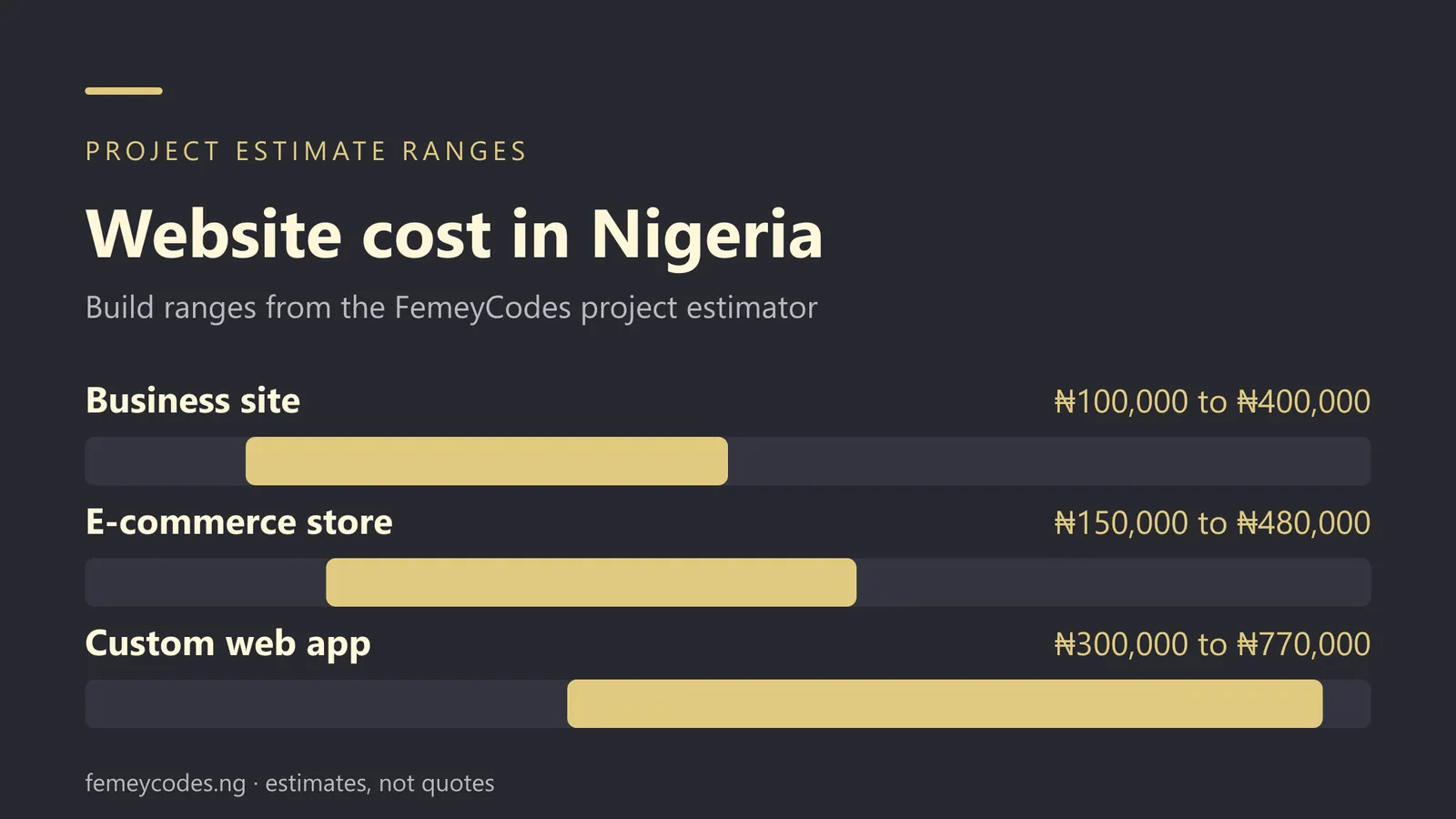
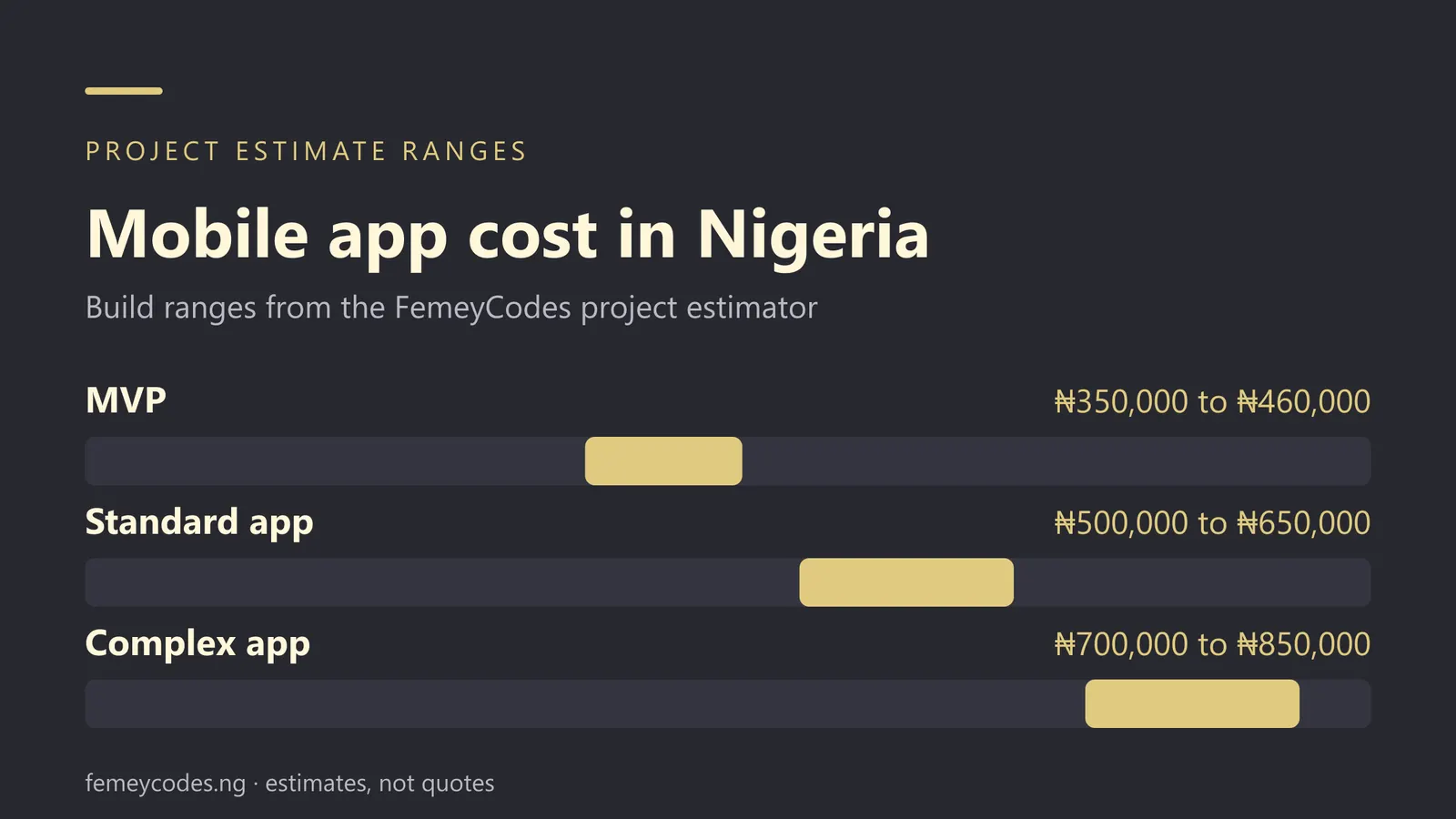
Then put a number on it before anyone writes code. Scope the work in our project estimator, compare the range against the problem it solves, and move only if the maths works. That single habit keeps trend-chasing out of your budget.
Whatever you pick, decide how you will know it worked before the work starts. Fewer lost orders. A support team answering fewer repeated questions. A cloud bill that drops instead of creeping. One number you check monthly is worth more than a strategy document, and it is usually the difference between a trend that paid for itself and one you quietly stopped mentioning.
Questions Nigerian businesses ask about these trends
Which of these trends matters most for a small business?
Offline-first design and WhatsApp-first commerce, because both touch customers you already have. They cost the least to act on and they fix problems you feel every week: lost orders, records that vanish when the network drops, and staff repeating the same answers on WhatsApp.
Should I build a progressive web app or a native app?
If your product is a catalogue, a booking flow or a form, start with a progressive web app. It installs from the browser, works on a weak connection and costs less than two native builds. Move to native when you need background services, heavy camera use or deep device integration.
What does the NDPA require from my business?
Know what personal data you hold, why you hold it, who can access it and how long you keep it. Then give people a plain privacy notice, delete data you no longer need and appoint someone accountable. The Nigeria Data Protection Commission can audit organisations that get this wrong.
Turn one trend into a real number
Scope the change you want in the estimator for a naira range and a timeline, or send the problem to us on WhatsApp and we will tell you honestly whether it is worth building.